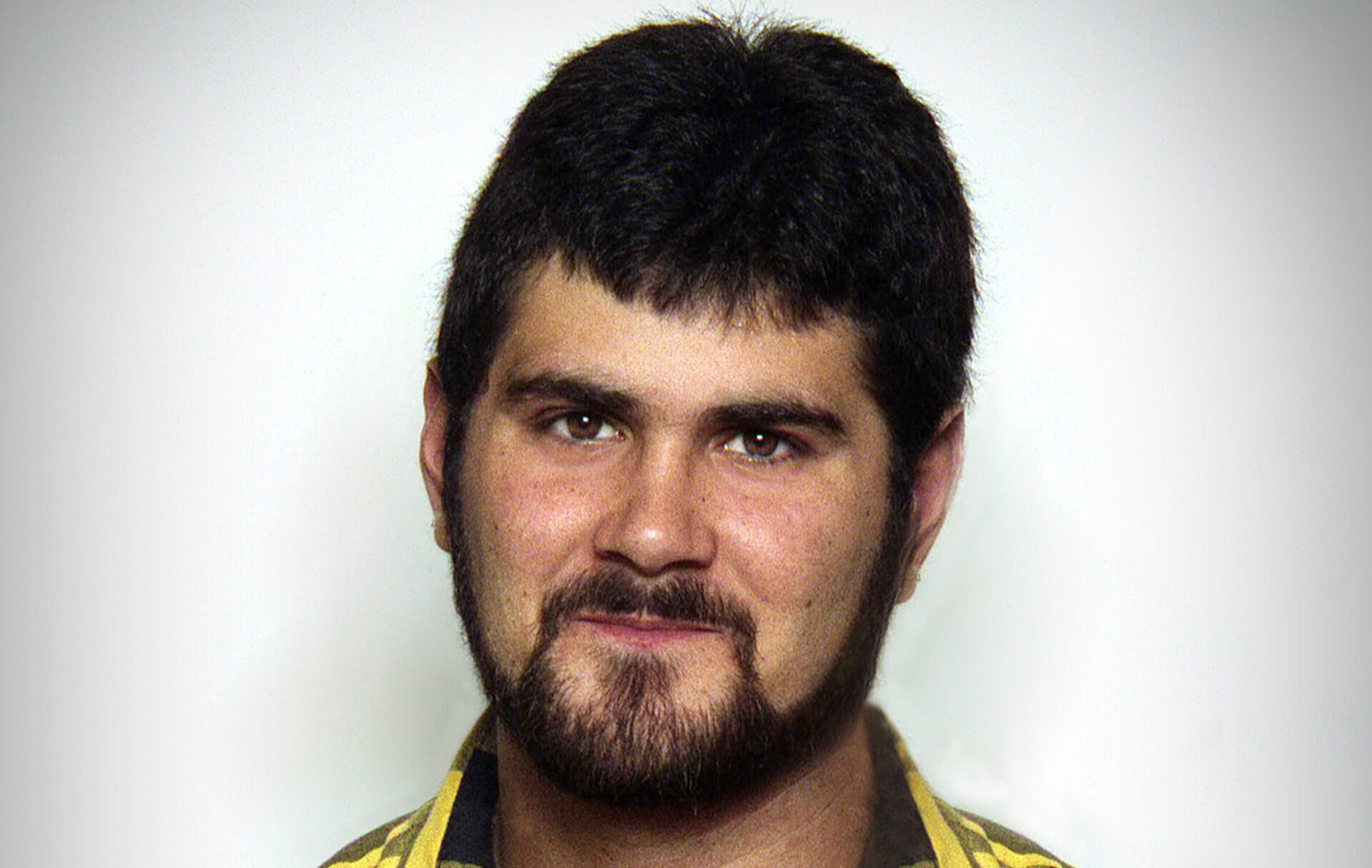
We left an empty chair for Todd Willingham on the dais on March 3, 2015 at the press conference with death row exonerees at the Day of Innocence at the Texas Capitol. After the press conference, we went to the office of State Senator Eddie Lucio, Jr to request that he file an historic first-time ever bill in the Texas Senate that would completely abolish the death penalty.
On March 13, 2015, for the first time ever, and in no small part because of the case of Todd Willingham, Senator Lucio filed a bill in the Texas Senate to completely abolish the death penalty.
Lobby Day Success! Senator Eddie Lucio has filed legislation to abolish the death penalty in Texas. This is the first…
Posted by Texas Moratorium Network on Friday, March 13, 2015
On March 10, 2015, more evidence emerged supporting the conclusion that Willingham was wrongfully convicted and that Texas executed an innocent man.
The Washington Post reports in “Fresh Doubts Over a Texas Execution” about new information on how a jailhouse snitch lied to help prosecutors convict Todd Willingham. Eight years after Cameron Todd Willingham was executed for setting a fire that killed his three children, in a case now widely faulted for its use of flawed arson science, his relatives are seeking a posthumous pardon from state officials. Read More. In 2010, Judge Charlie Baird wrote an order that would have exonerated Todd Willingham. As the Huffington Post reported, “Baird’s order clearing Willingham’s name never became official, because a higher court halted the posthumous inquiry while it considered whether the judge had authority to examine the capital case.” “This Court orders the exoneration of Cameron Todd Willingham for murdering his three daughters. In light of the overwhelming, credible, and reliable evidence presented by the Petitioners, this Court holds that the State of Texas wrongfully executed Cameron Todd Willingham.” Order Exonerating Todd Willingham
Dear former Governor Rick Perry: We have not forgotten what you did. Before his execution, Todd Willingham said, “Please don’t ever stop fighting to vindicate me.”

Eugenia Willingham speaking on the giant Jumbotron to the crowd at the 11th Annual March to Abolish the Death Penalty. Her remarks included reading an excerpt from a letter written by Todd Willingham. She said Todd’s dream was to abolish the death penalty and she hoped we could all work together to make Todd’s dream come true. The 11th Annual March to Abolish the Death Penalty was held in Austin at the Texas Capitol October 30, 2010.
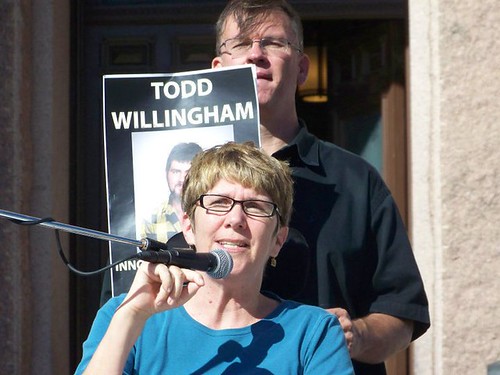
Elizabeth Gilbert also spoke at the 11th Annual March to Abolish the Death Penalty. Elizabeth is a Houston teacher and playwright who befriended Texas death row prisoner Todd Willingham. Her story is featured in the New Yorker article by David Grann about the case as well at the Frontline Documentary “Death by Fire” (Click to watch online). Elizabeth actively investigated the case on her own. She became convinced of Todd’s innocence and was instrumental in helping his family find an expert fire investigator to examine his case.
Former Texas Governor Mark White on Todd Willingham: “If there’s no arson, there’s no crime, and, therefore, he is innocent,” reports Newsweek. Below is a video of Gov. White speaking to reporters after he delivered the summation of the case on behalf of Todd Willingham’s family at the Court of Inquiry on October 12, 2010.

Eugenia Willingham and Patricia Willingham Cox, who are Todd Willingham’s stepmother and cousin, attended the meeting of the Texas Forensic Science Commission in Houston on July 23, 2010. Patricia Cox addressed the commission during the public comment period. They are pictured below with Texas Moratorium Network’s Scott Cobb. Texas Moratorium Network shot the video below of Todd Willingham’s cousin Patricia Willingham Cox speaking at the meeting of the Texas Forensic Science Commission in Houston on July 23, 2010. Click here to watch the video on YouTube. Or click here to watch it on the TMN Facebook page.